
Crosshair Placement
Crosshair placement is a key element of the mechanics in Fortnite and is critical to being competitive. It's something constantly practiced by every pro player, and makes fighting and editing quick and simple if mastered. But what do we really mean by crosshair placement?
It's probably pretty obvious that crosshair placement on an opponent is critical for good aim when firing a weapon (see our section on Aim Training for more on this). BUT it's also SO much more than that in Fortnite.
Your crosshairs are the central element of control for your character. They not only reflect the aim of a weapon but are the foundation of many of the functions of the game.
Crosshair placement is required for basic things, like OPENING a CHEST, PICKING UP LOOT, OPENING a DOOR, SELECTING a VEHICLE, PICKAXEING something, some MOTIONS, or even just determining WHERE YOU ARE LOOKING. You have to align your crosshairs on or near the intended object to even enable doing these basic things. You have to be quick and efficient in placing your crosshairs on such things in order to be effective in your actions.
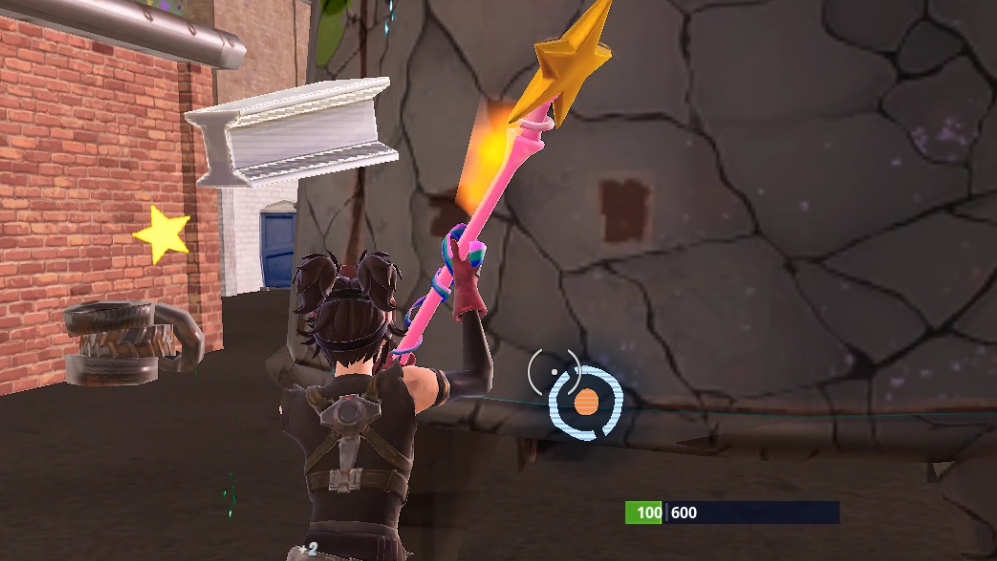
A simple example of applying crosshair placement for efficiency is in PICKAXEING an object. As you strike the object (wall, tree, stone, etc), the weak point will move around a bit. Learning how to quickly move your crosshairs to hit the new weak point with each swing will allow you to deal the maximum damage to that object, allowing you to destroy it in the fewest swings. One trick for this specific example is to be as close to the object as possible (like right up against it). This will keep the optimum strike point (weak point) closely centered on your screen and minimize the need for your crosshairs to be moved.
Crosshair placement is also critical to PLACING BUILDS. Where you have your crosshairs pointed or aligned will determine where you will place your piece and whether or not you can even place a piece. How far up, down, left, or right you place your crosshairs relative to other components and the horizon line will determine which piece you are going to build or edit and whether it is in the first layer of tiles around you or the next layer. Being able to quickly and effectively place your crosshair exactly where it is needed in order to place a build in the location you actually want is something you need to practice early and often.
Crosshair placement is especially critical to EDITING BUILDS. Where you have your crosshairs pointed or aligned will determine which sub-tiles you are selecting within your build piece, which will determine what shape you're going to get from your edit. Dragging your crosshairs across the entire piece is not efficient (i.e. takes a long time) and will likely lead to you getting shot if its during a build battle.
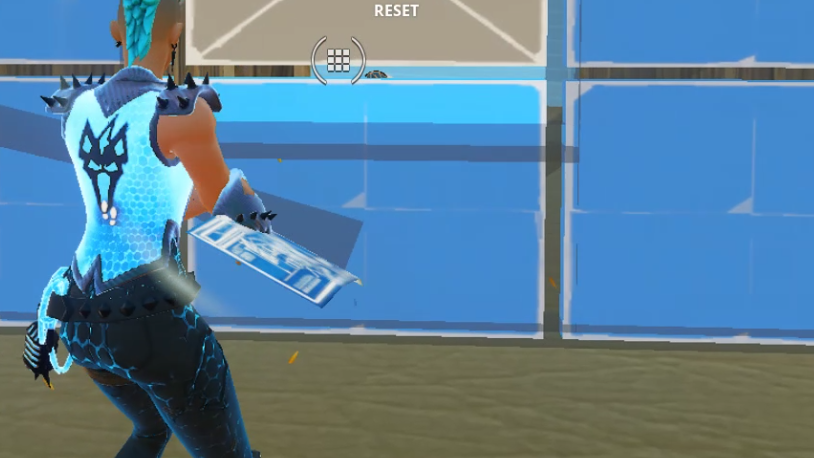
For all actions that rely on your crosshairs, MASTERING CROSSHAIR PLACEMENT means moving your mouse or controller joystick as little as possible at all times to achieve your desired action. So for editing, mastering crosshair placement means touching just the edges of the tiles you want to grab. It will also mean having your crosshairs generally living near the intersections of tiles and not really towards the middle of an edit tile (unless you're about to do something else with that crosshair placement immediately after, like taking a shot).
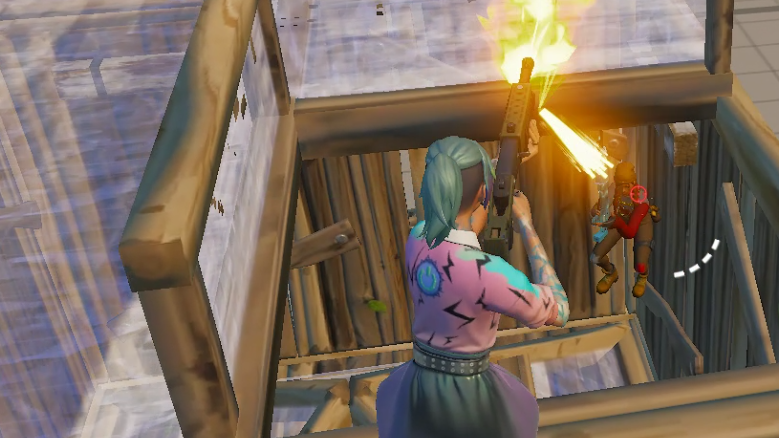
Long story short, you need to learn to see your actions, and the actions of your opponents, through your crosshairs, while of course still also taking in all the information happening around them in your peripheral vision. Don't worry about where your character's pickaxe or gun appears to be pointing, just the location of your crosshairs and ensuring there is a clear path from your gun to the crosshairs in order to hit the shot. This is especially important during build fights as the POV will change as you move around in a box, sometimes showing your character huge and other times zooming in past where you can see them at all. But at all times you can trust where your crosshairs are.
Plan and practice your building and editing so that it requires the least amount of crosshair movement possible. To achieve this, you'll also want to experiment with your settings to get a balance between the speed of movement and the level of control you have over your crosshair placement so you're not swinging it past your intended placement.
Practice watching your opponents move, through the lens of your crosshairs. This will help in tracking them, reading their movement, and leading your shots when necessary.
For more info on crosshair placement as it relates to aim, see our module on aim training.